It's January, it's 10°F outside, and your furnace just stopped. Before you panic — or call for service — there are a few things every Maine homeowner should check first. A surprising number of furnace calls turn out to be simple resets that you can do yourself in under five minutes.
That said, some furnace issues are genuine safety concerns. This guide walks you through the safe steps to try, the warning signs to watch for, and the point at which you should absolutely pick up the phone.
Step 1: Check the Thermostat
This sounds obvious, but it's the most commonly missed fix. Make sure the thermostat is set to HEAT (not COOL or AUTO), and that the set temperature is at least 5°F above the current room temperature. If you have a programmable or smart thermostat, check that it hasn't been accidentally set to a schedule that drops the temperature.
- Set to HEAT mode
- Set temperature 5°F above room temperature
- Check batteries — many thermostats will show a low-battery indicator
- If it's blank or unresponsive, replace the batteries first
Step 2: Check the Circuit Breaker
Your furnace has a dedicated circuit breaker in your electrical panel. Find the breaker labeled 'Furnace,' 'HVAC,' or 'Air Handler.' If it's in the tripped position (usually halfway between ON and OFF), flip it fully to OFF, then back to ON.
A tripped breaker is a symptom, not a cause. If it trips again within a day or two, there's an underlying electrical issue — stop resetting it and call a technician.
Step 3: Find and Press the Reset Button
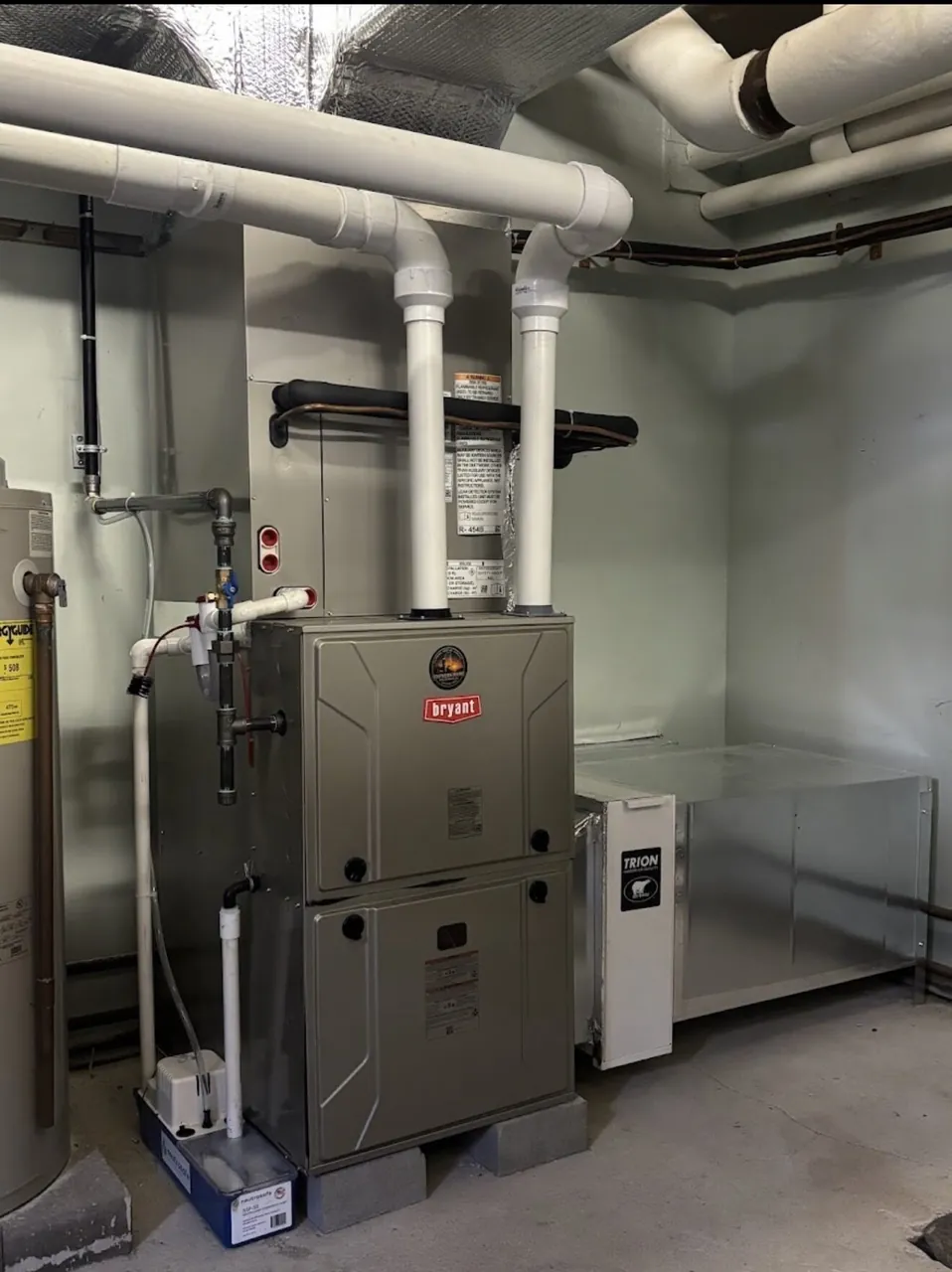
Most furnaces have a red or yellow reset button on the burner assembly — usually visible when you open the furnace door panel. Press it firmly once. You should hear a click. If the furnace starts up, great. Give it 10 minutes to reach operating temperature.
Only press the reset button ONCE. Pressing it repeatedly can flood the heat exchanger with unburned fuel, which is both a safety hazard and an expensive repair.
Step 4: Check the Furnace Switch and Power
There's often a light switch on or near the furnace that controls power to the unit — it's frequently mistaken for a regular light switch and accidentally turned off. Make sure it's in the ON position. Also check that the furnace door panels are fully closed and latched; most furnaces have a safety interlock that prevents operation if the panel isn't seated correctly.
Step 5: Check the Air Filter
A severely clogged air filter restricts airflow to the point where the furnace overheats and shuts off on a safety limit. Pull the filter out and hold it up to a light — if you can't see light through it, it needs to be replaced. A new filter costs $5–$20 at any hardware store and should be changed every 1–3 months in a Maine home.
When You Should NOT Try to Reset
Some situations require a professional immediately. Do not attempt to restart your furnace if you notice any of the following:
- You smell natural gas or propane anywhere near the unit — leave the house immediately and call your gas utility from outside
- You see yellow or orange flames (should always be blue on a gas furnace)
- You notice cracks or rust on the heat exchanger
- Your carbon monoxide detector has gone off
- The furnace has been making loud banging, screeching, or grinding noises
- The reset has tripped more than once in 24 hours
What Happens During a Professional Furnace Diagnostic
If the steps above don't solve the problem, a furnace diagnostic call is typically $75–$150 in southern Maine. A technician will check the igniter, flame sensor, gas valve, pressure switches, heat exchanger integrity, and control board. Most repairs can be completed on the same visit.
Southern Maine Mechanical serves all of Cumberland and York County. We offer same-day furnace calls during the heating season and 24/7 emergency service when the heat goes out at night. Call (207) 560-7890.